


My story
I've been vegan for over a decade now, and I'm excited to share my favourite recipes and cooking tips to vegan veterans and plant-based-curious readers alike. I started experimenting with vegan recipes when I was a relatively new vegan and had moved out of my family home for university. I found it difficult to find vegan alternatives and decided to branch out with my cooking skills by trying out age old vegan hacks (shout out to the flax-seed egg) and testing out new (or new to me) tricks, cuisines and flavour combinations. This website is everything I have learnt in those years of vegan cooking, and I'm so excited to share it with you.

Why vegan?
When I was 6 years old, I realised that animal slaughter for meat consumption was inhumane and unfair, so I told my parents that I was going to become a vegetarian. For many years, I thought this was enough, however I knew that animal produce industries did not care much for the animals. Only after I became vegan at the age of 17, did I begin to realise the extent of this cruelty.
Aside from slaughter (which cannot, by definition, ever be humane), most animals in the food industry are treated as objects without sentience, unworthy of respect. They are often kept in awful living conditions: some trapped in cages so small they are unable to move, some never seeing the sunlight, and if they are not fit for consumption or to contribute to the industry, they are tossed aside: gassed, crushed, shot, electrocuted, murdered.
For me, being vegan is primarily to reduce animal suffering. Becoming vegan was a way to try to align my actions with my values. Growing up with one vegetarian parent and meat-eaters in my family meant I was raised as a meat-eater but often had vegetarian meals or substitutes. From a young age, I enjoyed vegetables in my mother's cooking, however it still took sacrifice and self-control for me to give up meat at 6 and all animal products at 17.
After becoming vegan, I started researching and finding out about the effects of transitioning to a plant-based diet on on our bodies and on the environment. Whilst there is some dispute over the impact of a vegan diet on our health, there is plenty of evidence to show that eating more vegetables and less meat overall generally leads to fewer health issues. Furthermore, the animal industry is one of the leading causes of greenhouse gas emissions contributing to global warming. By eating more plants and fewer animals, we can begin to reverse the devastating effects of climate change.
If you're thinking about giving up meat and/or animal products but are reluctant to give up the flavours and textures you enjoyed, the vegan alternatives will surprise you. If I had to eat plain lettuce for the rest of my life to save animals in the food industry, I would. Luckily, no one has to! The best meals I have ever cooked or eaten have been vegan, and I can't wait for you to see what's on the menu.

My thoughts on meat substitutes
On every viral reel or TikTok of a vegan recipe which is recreating a meaty dish, someone in the comments will be there asking "Why do vegans want to eat something that resembles meat?”
For many vegans, disliking the taste, appearance, or texture of meat is not why they become vegan, but rather it is an active attempt to boycott the industry that causes so much suffering and damage both to the directly impacted animals and to our environment on a wider scale.
There are indeed some vegans who don't like the flavours and textures and feel as though the appearance reminds them of animal suffering, so they tend to avoid food that looks or tastes like meat. This is a personal choice. Good for them.
Let's be real though - processed store-bought vegan meat alternatives don't look like dead animals; real meat doesn't always look like a dead animal either. People don't usually see sausage shapes in the supermarket and think of a squealing pig being gassed to death. As with meat-eaters who are able to form a disconnect between the meat on the shelf and the animal from which it came from, so too are vegans able to see vegan "meat" as just food. And yes, maybe if we think about it a bit too hard, it's a little bit icky, but at the end of the day it doesn't actually cause harm like the meat counterpart and therefore has no guilt attached to eating it. It's really not a big deal.
For those who are trying to eat more plant-based for whatever reason - reducing animal suffering, environmental reasons or health - vegan meat substitutes can be a great way to transition from meat in a way that keeps the comforting and familiar textures and flavours on their plate without the devastating impacts of the animal industry.
I personally don't usually go out of my way to make vegan products look like meat (for example, shaping tofu to look like chicken fillets) because it doesn't make a difference to me, however some people enjoy the challenge of recreating traditionally meat-based dishes as accurately as possible without the meat, and that's totally valid.
I will say that it's generally more practical to shape vegan meat substitutes into classic meat shapes though: burgers and sausages fit perfectly into burger and hot dog buns, chicken wing shapes are great for dipping into sauces with their natural handle, ham or bacon slices are practically begging to be sandwiched in bread, and nuggets have the most satisfying bite.
We live in a world that primarily caters to meat-eaters; we just have to try to make it vegan-friendly. If you want to help, then you can stop asking vegans why they eat food that resembles meat. The answer is simply: because it's not meat.
Where do you get your protein?
This is one of the most common questions you get asked as a vegan, and is often met with an eye-roll. It has become even more frequently asked with the rise in popularity of fitness and lifestyle blogs and vlogs in recent years, claiming that protein = muscle.
Protein is an important part of your diet which aids the healthy growth and recovery of your muscles, particularly after intense exercise, and also acts as an energy source. Protein is only at its most effective up to a certain amount, so people who are eager to gain muscle are often actually eating more protein than needed. Of course, the best way to build muscle is through exercise - your diet can't do this for you, but it can make the results of your exercise more fruitful (no pun intended).
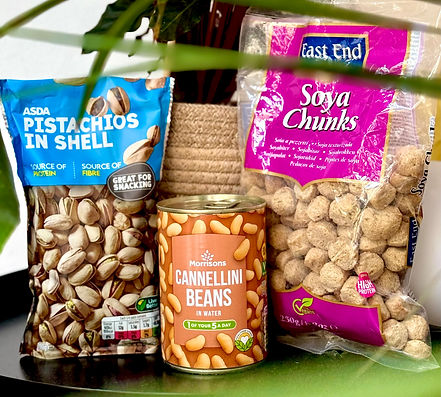
There are some plant-based foods that are surprisingly high in protein: most notably legumes, beans and pulses, as well as seeds, nuts, and some vegetables and grains. With such a variety of high-protein plant food, it's actually not so difficult to hit recommended daily protein intakes without having to give it too much thought, as long as you're eating a balanced diet and including nutrients from different food sources.
In addition to pure plants, there are processed vegan foods which are very high in protein. "But aren't processed foods unhealthy?" I hear you ask. No foods are inherently unhealthy, but of course a diet consisting entirely of highly processed foods will not provide all the nutrients you should be getting from food. The fact is that the majority of foods are processed to a certain extent, usually to increase the shelf life. Drying legumes, grinding grains, preserving fruits and frying potato crisps are all ways of processing food. The more highly a food is processed (for example, a combination of blending, cooking, preserving and seasoning foodstuff so it's ready to eat from a supermarket shelf) , the more opportunities there are to add salts, fats and sugars, which is where excessive consumption can cause issues.
Tofu and seitan are examples of processed plant-based protein sources which are commonly used in vegan cooking as a meat alternative, not only for their meaty texture, but also for their high protein to low carbohydrate ratio. Adding a portion of tofu or seitan to your meals is an easy way to boost your protein intake without touching a dead animal. Other processed high-protein examples include most plant milks, tempeh, mock meats, vegan protein powder and some cereals. The benefits of eating some of these processed food sources is that they are often fortified with vitamins and additional protein to make reaching those intake goals even easier.
As a vegan, you only really need to focus on your protein intake if you are exercising regularly and trying to build muscle. It's not only possible, but it's quite easy to get enough protein as a vegan, so don't even worry about it.

Travelling as a vegan
Coming soon